Northern detailers talk about salt. Here the equivalent conversation is about the sun, and it is a slower, quieter kind of damage — nothing corrodes, nothing appears overnight, and the vehicle simply looks four years older than it is by the time anybody mentions it.
None of what follows is specific to Texas in kind. It is specific in degree: a long season of intense ultraviolet light and cabin temperatures well past anything a material was comfortably designed for, repeated every year.
What it does to paint
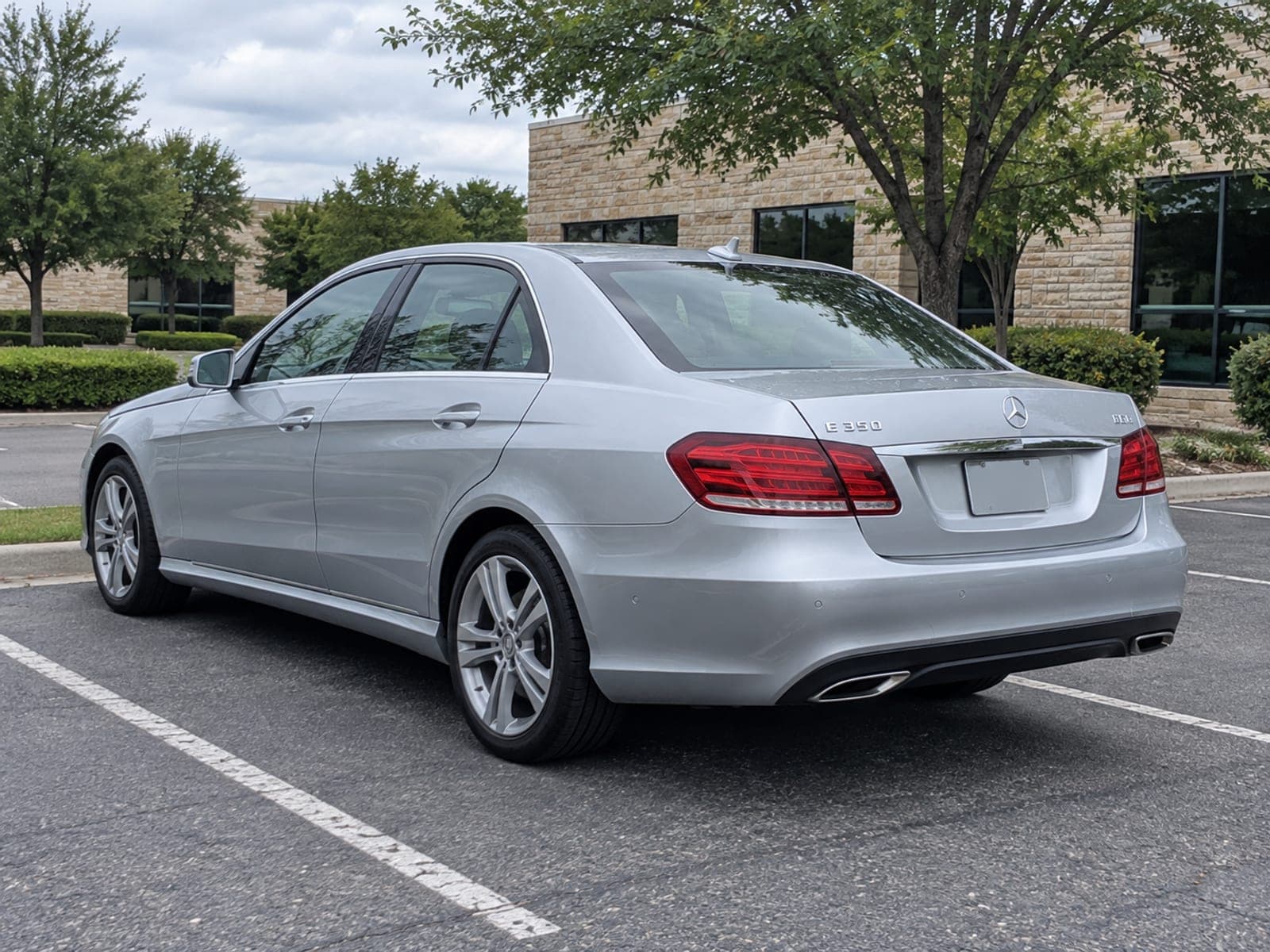
Ultraviolet light breaks down the resins in a clear coat from the surface inward. Early on that shows as a loss of depth — the finish reflects softly rather than sharply, and a color that used to look wet looks flat. That stage is recoverable.
What is not recoverable is clear coat failure. Once the layer has degraded far enough it delaminates, and it goes in patches — the roof, the hood, the top of the trunk, in that order, because those are the panels the sun hits squarely. A peeling roof is not a polish job or a coating job. It is a repaint.
Red and black show it first
Red pigment fades visibly on its own, and black absorbs the most heat. Neither is a design flaw — they are simply the two finishes where the same amount of exposure shows up earliest.
Horizontal panels take several times the exposure
The sun is overhead for most of the day. Roof, hood and trunk lid age on a completely different schedule from the doors, which is why an older car often looks fine from the side and tired from above.
Heat plus contamination is the real damage
A bird dropping on a cool panel is a cleaning job. The same dropping on a panel at midday etches within hours, because heat drives the acid into the clear coat.
What it does to the dashboard and trim
A closed cabin parked in direct sun reaches temperatures far above the air outside, and the dashboard is the hottest surface in it. Plastics respond by off-gassing the plasticizers that keep them flexible.
Three things follow from that, and all three are familiar to anyone who has owned a car here for a decade.
The dash loses its even matte finish, goes shiny in the places the sun reaches, and eventually becomes brittle enough to crack
Everything that leaves the plastic lands on the inside of the windshield as an oily film, which is invisible until headlights hit it at night
Adhesives soften — trim clips let go, door cards lift at the top edge, and a sunshade left against the glass can bond to it
What it does to leather and upholstery
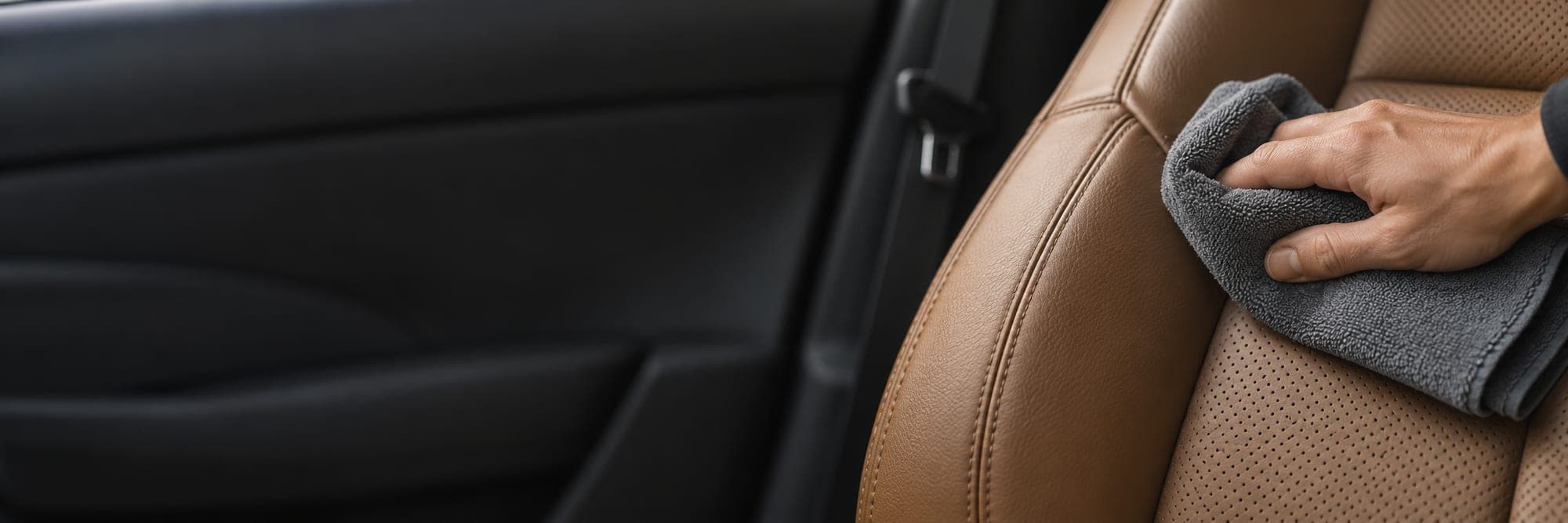
Automotive leather is coated rather than bare — it is a pigmented top layer over hide, and that top layer is what UV attacks. It dries, hardens, and then cracks along the seat bolster where the material flexes every time someone gets in.
Conditioning is not about making leather look glossy. It is about keeping the coated surface flexible enough that flexing it does not split it, and about replacing the UV inhibitors that wear off. Applied to a clean surface a few times a year, it does its job; applied over dirt it seals the dirt in.
Fabric fares slightly better and fades instead — most visibly on the rear parcel shelf and the top of the back seat, where the rear glass acts as a magnifier for most of the afternoon.
Parking is the cheapest protection there is
Nothing in a bottle competes with shade. If a vehicle can live under cover it will age at a fraction of the rate of the identical vehicle in an open lot, and that is the whole intervention.
Face the same way every day and you will see it
A car parked with the same flank into the afternoon sun ages asymmetrically. Turning it around occasionally is free.
A windshield shade is worth more than it looks
It is not about comfort. It keeps the dash top and the upper seat backs out of direct light, and those are the two surfaces that fail first.
Cracking the windows is a heat fix, not a UV fix
It lowers the cabin temperature, which helps adhesives and electronics. It does nothing for the ultraviolet light, so it is half a solution.
What protection actually helps
On the outside, the job is a sacrificial layer over the clear coat that takes the exposure instead of it. Wax is the least durable of those and struggles in sustained heat; a sealant holds up better; a ceramic coating holds up longest and is the one worth considering for a vehicle that has no garage to go into.
On the inside, the equivalent is a UV-inhibiting dressing on plastics and vinyl and a proper conditioner on leather — applied to clean surfaces, in thin coats, with the excess removed. A greasy dashboard is not protected, it is just greasy, and it will attract dust and throw glare into the windshield.
A summer routine that is short enough to keep
Get bird droppings, bug splatter and tree sap off the same day rather than at the weekend — heat turns all three from soil into etching
Wash in the early morning or the evening, never onto a hot panel, and dry it rather than letting it dry
Park in shade where there is any, and turn the vehicle around occasionally where there is not
Use a windshield shade whenever the car sits for more than an hour
Keep protection current on the paint and the interior, rather than applying it once and assuming it is still there
That last point is the one that quietly decides everything else. Protection is consumable, and the interval that matters is not how long the product claims to last but how long it lasts in this climate — which is shorter. Keeping it topped up is most of what detailing on a schedule is for.
There is no single correct interval, and anyone who gives you one is guessing. What there is, is a short list of factors that decide it — and they are all things you already know about your own vehicle.
The argument for a schedule is not about discipline. It is that dirt changes state over time — and once it has, removing it stops being cleaning and starts being repair.
Yellowed headlights are a safety problem before they are a cosmetic one. Here is what causes the haze, what restoration removes, and the step that decides whether it lasts a season or years.
·5 min read
Book in two minutes
Ready to book it?
Enter your ZIP code, tell us what you drive, and we will show you the arrival windows we have open.