Wax, sealants and ceramic coatings explained

Three products, three different jobs, and a lot of marketing in between.

Paint protectionPublished 4 min read

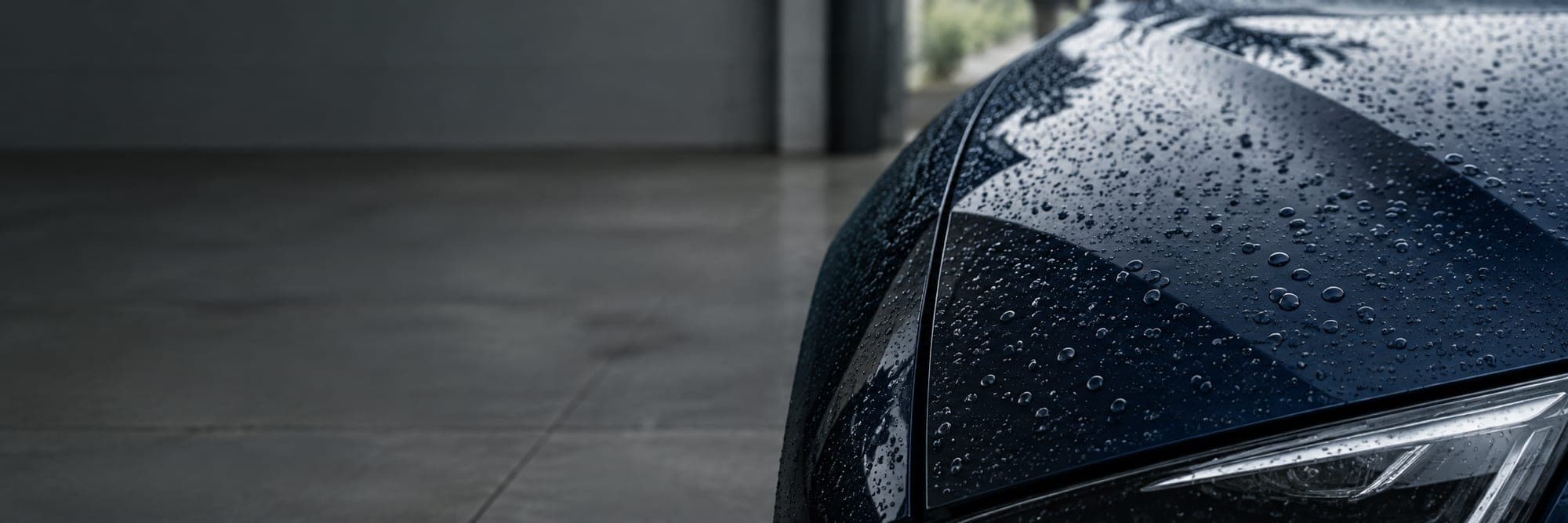
Water beading on the sealed paintwork of a dark blue car

Protection is the step that decides whether a detail lasts six weeks or six months, and it is the step with the most confident nonsense written about it. All three products do the same fundamental job — put a sacrificial layer between your clear coat and the world — and they differ in what they are made of, how long they stay, and what they cost to apply.

Carnauba wax

A natural wax from a Brazilian palm, blended with oils and solvents so it can be spread. It is the oldest answer and it is still the one that looks best on certain paint.

What it does well
Depth and warmth, particularly on dark and on red paint. A waxed black panel has a glow that synthetic products struggle to match.
How long it lasts
Typically weeks rather than months. Carnauba softens with heat, so a car parked in summer sun loses it faster than the same car in a garage.
Where it is the right choice
A garaged weekend car, a show car, or anyone who enjoys applying it. It is the least durable and the nicest to look at, and both of those are fine reasons.

Synthetic sealant

A polymer engineered to bond to clear coat rather than sit on it. It gives up a little of the warmth of carnauba and gets several times the life in exchange.

What it does well
Durability and chemical resistance. It shrugs off detergent, road salt and rain far better than wax, and it gives a sharp, glassy reflection rather than a warm one.
How long it lasts
Commonly several months, heavily dependent on how the vehicle is washed and where it is parked.
Where it is the right choice
A daily driver that lives outside. It is the sensible default for most vehicles, which is why it is what a standard exterior detail applies.

Ceramic coating

A liquid polymer, usually silica-based, that cures into a hard, semi-permanent layer chemically bonded to the clear coat. It is not a wax with a different name — it is a different category of product with a different application process and a different price.

What it does well
Years rather than months of life. Strong resistance to chemical etching and UV. Water and dirt release very easily, so routine washing gets noticeably quicker.
What it demands
The paint underneath has to be right first. A coating locks in whatever it is applied over, so decontamination and usually machine polishing come first — and that preparation is most of the cost.
Where it is the right choice
A vehicle you are keeping, that lives outdoors, whose paint is in good condition or is being corrected anyway.

Choosing between them

Ignore the durability figures for a moment and answer three questions about the vehicle instead.

Where does it sleep?
Outdoors under sun and sap is the hardest case and argues for a sealant or a coating. A garage is gentle enough that wax becomes reasonable.
How long are you keeping it?
A coating is a multi-year investment. On a lease with eighteen months left, a sealant refreshed twice will cost less and finish level.
How is it washed?
This matters more than the product. A coated car put through a friction tunnel every week will look worse in a year than a waxed car washed properly by hand.

What shortens any of them

Protection does not expire on a date. It is worn off, and the same short list does most of the wearing:

  • High-alkaline detergent, which is what most touchless washes clean with
  • Automatic wash brushes, which abrade the layer as well as the paint under it
  • Heat — a dark car in full sun cycles a wax through softening every day
  • Bird droppings and sap left to sit, which eat straight through the layer at that spot
  • Washing with household dish soap, which is designed to strip oils and does exactly that

The single most useful habit is a proper hand wash with a pH-neutral shampoo, two buckets and a clean mitt. It is worth more to the life of any protection than the choice between the three products above.

The honest summary

For most people, most of the time: a synthetic sealant applied to properly decontaminated paint, refreshed two to four times a year, is the best value in car care. A coating makes sense when the paint is being corrected anyway and the vehicle is a keeper. Wax makes sense when you enjoy it.

What always has to happen first is the preparation. Protection applied over bonded contamination fails early and unevenly — what exterior detailing actually removes covers that step.

What this applies to

Keep reading

Related articles

Chosen by what they have in common with this one, rather than by what was published most recently.

A dark blue BMW 5 Series on a residential driveway with the paintwork clean and even
Paint protection

How long paint protection really lasts

Durability claims are measured in ideal conditions. Your vehicle does not live in ideal conditions. Here is what actually wears protection off, and how to check whether yours is still there.

Book in two minutes

Ready to book it?

Enter your ZIP code, tell us what you drive, and we will show you the arrival windows we have open.

No depositTwo-hour arrival windowsWe come to you