Most arguments for a maintenance schedule are really arguments about willpower — get ahead of it, stay on top of it, do not let it slide. That is not the interesting part. The interesting part is that neglect is not simply more of the same dirt. Dirt changes state, and after it changes state the work required to remove it is different work.
What happens to paint that is left
Follow one contaminant through a year on an unprotected panel.
Week one: brake dust lands on a warm panel. It is metallic, and it is sitting on the surface. A wash removes it.
Month one: the same particles have begun to embed in the clear coat. Soap no longer reaches them; they need a chemical iron remover.
Month three: they are oxidizing. On light paint this is the point at which orange specks appear, and people assume their car is rusting.
Month six: the oxidation has bitten into the clear coat. Chemistry no longer removes it — the surface has to be mechanically leveled.
Month twelve: leveling means machine polishing, which removes clear coat permanently and is measured in hours rather than minutes.
The same escalation applies to insect residue, sap and water spots. Each starts as something that rinses off, passes through a stage where a chemical removes it, and ends somewhere only an abrasive will reach. A vehicle with intact protection never gets past the first stage, because the contamination lands on the sacrificial layer instead of on the paint.
What happens to an interior that is left
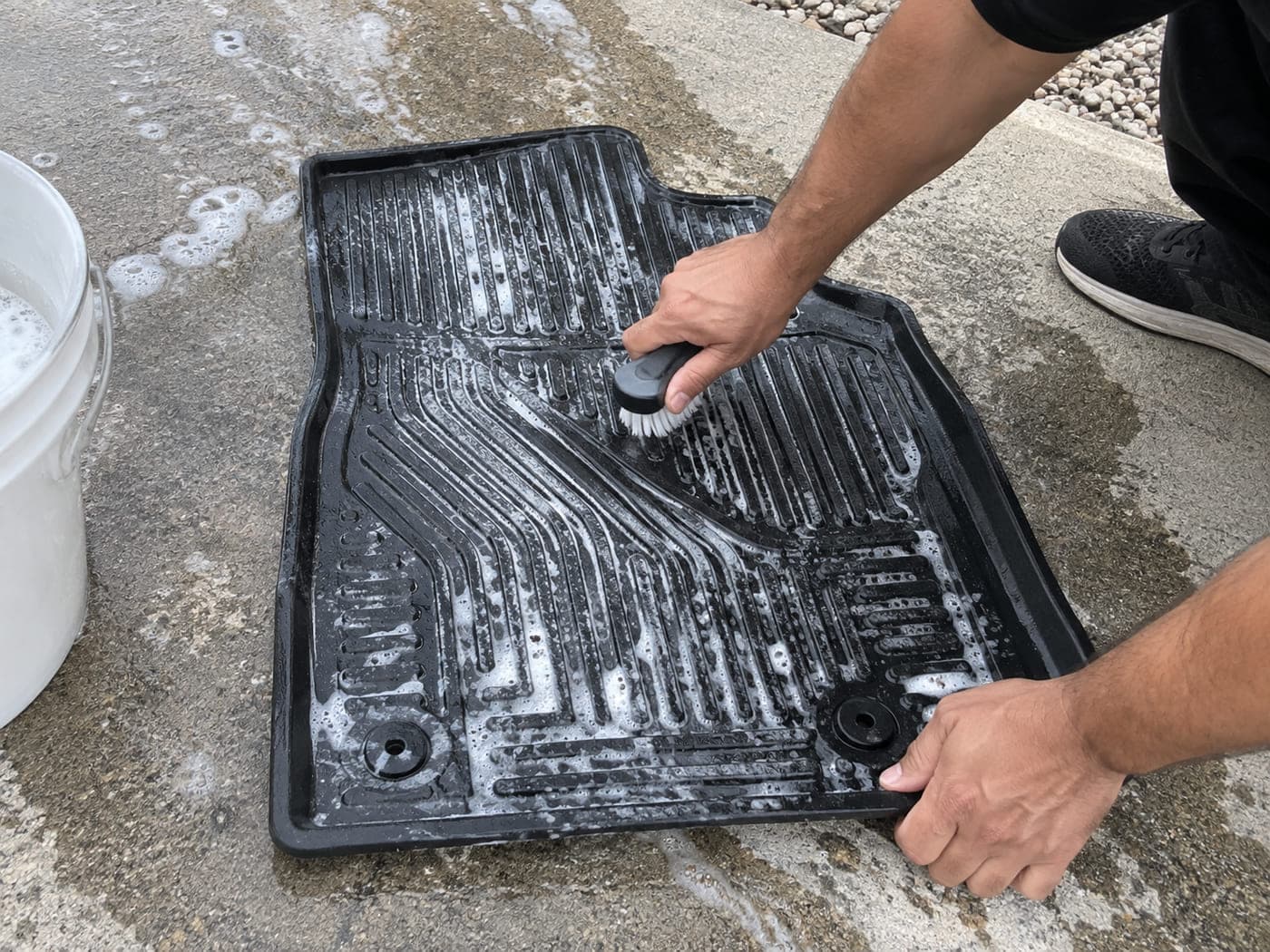
Carpet works the same way, one layer down. Soil that is vacuumed weekly stays on the fiber face. Soil that is walked on for months is driven through the pile into the backing — and once it is in the backing, a vacuum cannot reach it and only hot water extraction will.
Spills follow the same path more quickly. Blotted the same day, most come out entirely. Left to dry, re-wetted by a wet shoe, warmed by a closed car in summer, the same spill has soaked into the foam, fed something, and become an odor with a physical source. That is the difference between a clean and a deep interior clean.
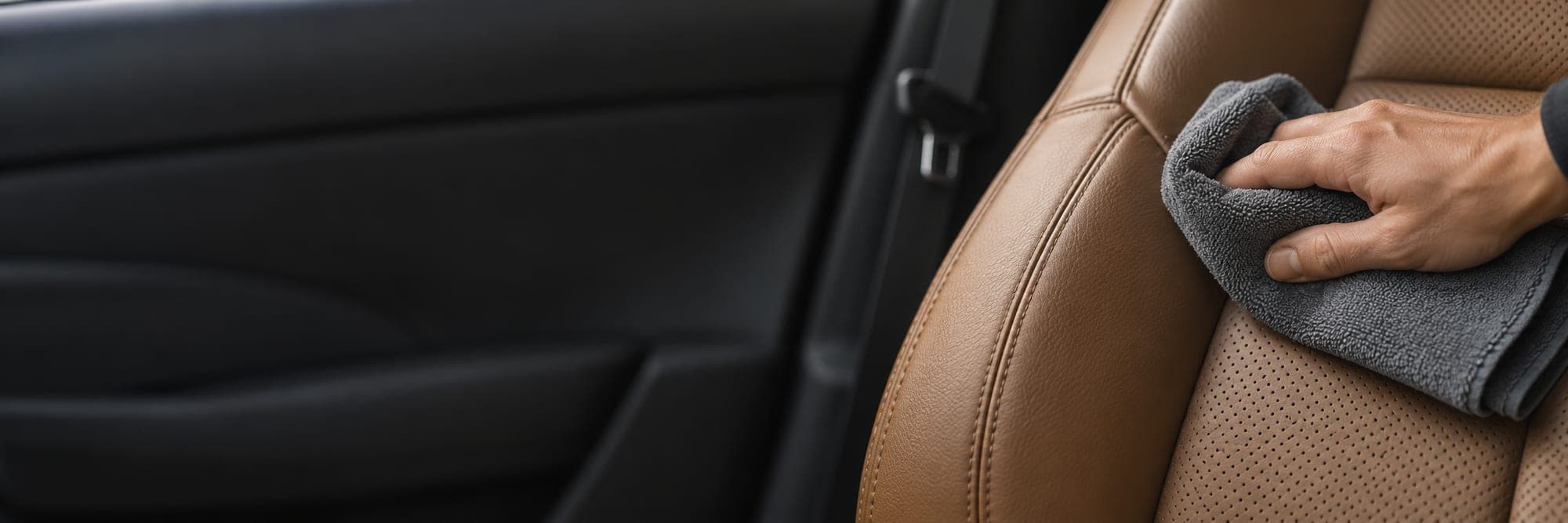
Leather is the least forgiving of all. Its finish is a coating, and dust plus body oil plus friction wears through it at the bolsters. Cleaned and conditioned regularly, that takes many years. Left, it cracks — and a cracked bolster is upholstery work, not detailing.
Why upkeep costs less time
A maintenance visit is short because the vehicle has not had time to accumulate anything: wash, check the decontamination, refresh the protection, reset the interior. A recovery visit repeats all of that and adds everything that bonded in between — often several hours of work that exists only because nobody came sooner.
Which means the real comparison is not between paying for details and paying for nothing. It is between many short visits and a few long ones, plus the occasional piece of correction that upkeep would have prevented entirely.
The first visit is the long one
If a vehicle has not been detailed in a while, the first appointment is the heaviest it will ever be — because that is the visit that undoes everything above. It is worth being honest about the condition when booking so the right amount of time is reserved, rather than having a detailer discover it on arrival.
Every visit after that is maintenance, and each one does less than the last. That is the entire argument for a schedule, and it is a physical argument rather than a motivational one.
Why fleets work this way already
Businesses that run vehicles worked this out long ago, for a reason that has nothing to do with paint: a vehicle carrying a company name is either presentable or it is advertising the opposite. Waiting until it looks bad means it has already looked bad to customers for weeks.
The same logic scales down to one car. The point of a rhythm is that the vehicle never reaches the state you would have booked a detail to fix.
There is no single correct interval, and anyone who gives you one is guessing. What there is, is a short list of factors that decide it — and they are all things you already know about your own vehicle.
Sun does more damage to a car here than salt does anywhere north of us, and it does it quietly. Here is what heat and ultraviolet light actually break, in the order they break it.
Durability claims are measured in ideal conditions. Your vehicle does not live in ideal conditions. Here is what actually wears protection off, and how to check whether yours is still there.
·4 min read
Book in two minutes
Ready to book it?
Enter your ZIP code, tell us what you drive, and we will show you the arrival windows we have open.