


How often should you detail your vehicle?
There is no single correct interval, and anyone who gives you one is guessing. What there is, is a short list of factors that decide it — and they are all things you already know about your own vehicle.
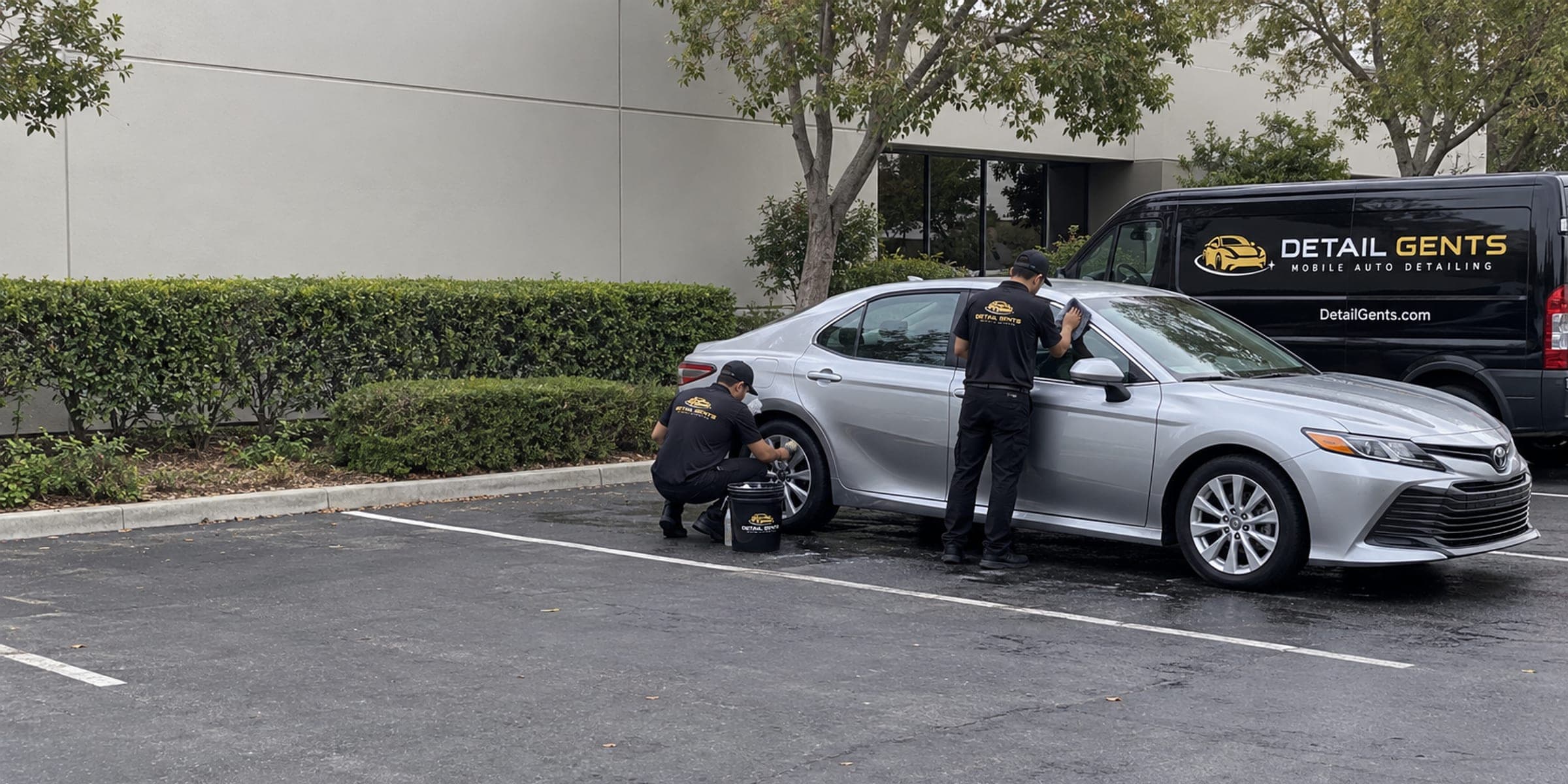
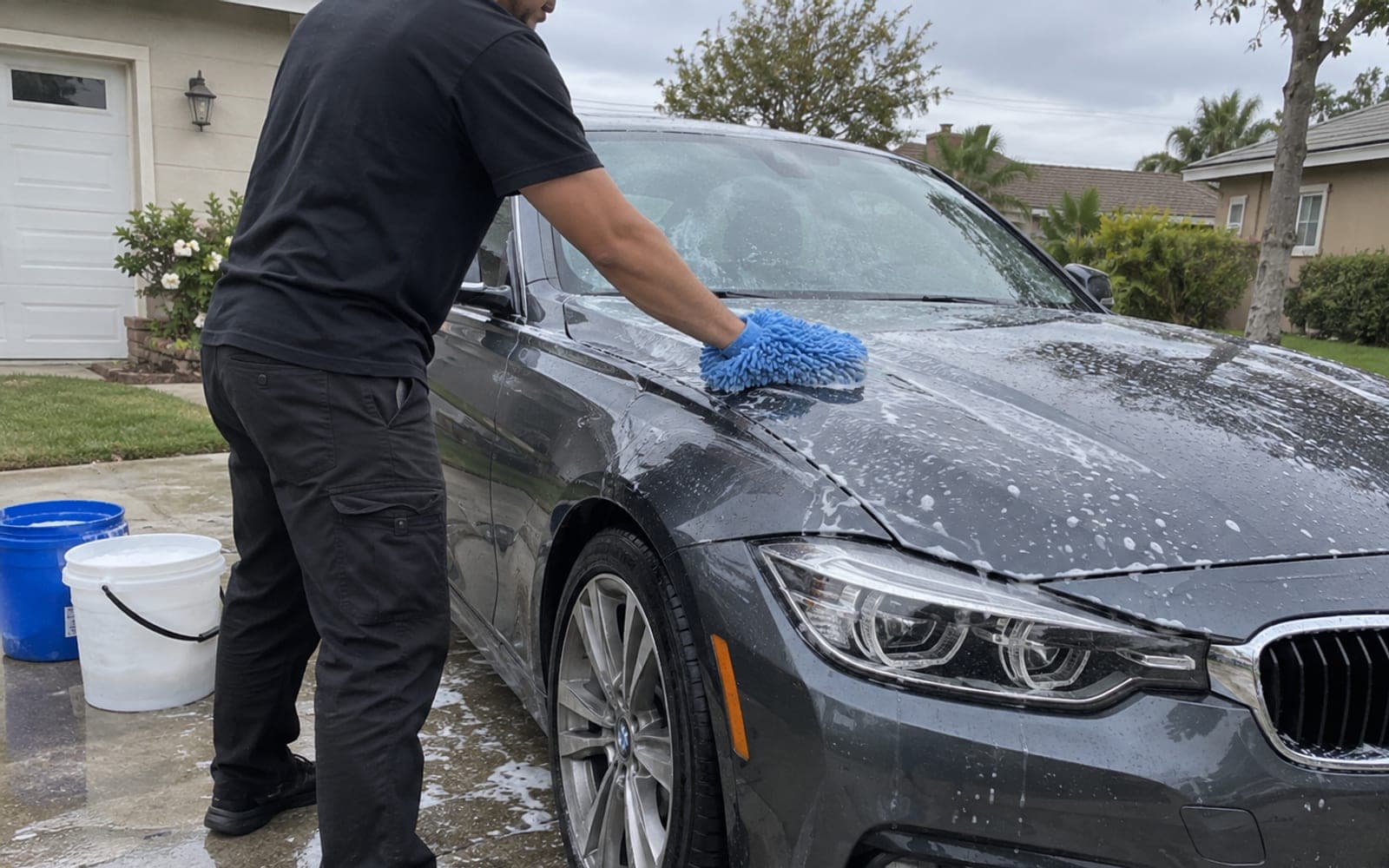
A vehicle seen regularly never needs rescuing. Choose your schedule.
How recurring care works
There is nothing to join and nothing to get out of, which is why there is no page on this site called Plans.
An ordinary booking. Choose the service your vehicle needs and be honest about the condition — the first visit is always the longest one.
Pick a schedule during booking. It records how often you want the vehicle seen; it does not charge for anything that has not happened.
Each visit is the full service you picked, run in the same order by the same team. Your vehicle, address and access notes are already on your account.
Save with recurring service
Less about how much you want to spend than about where the vehicle spends its nights. Your exact recurring price is calculated during booking, from the vehicle in front of us.
Every week
Vehicles that live outside and are driven every day.
The vehicle never gets far from clean, so each visit is maintenance rather than recovery. The usual choice for demonstrator cars and anything photographed often.
Every two weeks
Daily drivers that see highway miles and weather.
Close enough together that road film and brake dust never get a hold, and far enough apart to stay sensible for a car that is simply used.
Every month
Cars kept in a garage, or driven lightly.
The most common schedule. Enough time passes to be worth doing properly, not enough for anything to become difficult to put right.
Every three months
Weekend and stored vehicles, and seasonal resets.
A full detail four times a year. Each visit does more work than a monthly one because more has had time to settle.
Each saving is the published percentage off the standard rate for that service. It is a percentage rather than an amount because it holds whatever you drive — and your exact recurring price is confirmed before every visit, never after it.
Recurring savings are earned over 2 completed visits. There is no joining fee, no minimum term beyond those 2 visits, and nothing is charged up front. If you stop before then, we simply recover the saving you have already received — never a fee, and never a charge for work we have not done. If we cancel or get it wrong, nothing is recovered. Reschedule, skip, pause or change how often we come at any time.
Choosing one
Cars kept in a garage, or driven lightly.
The most common schedule. Enough time passes to be worth doing properly, not enough for anything to become difficult to put right.
Enough time passes to be worth doing properly, not enough for anything to become difficult to put right. This is the interval most vehicles settle on.
What it applies to
A schedule is a property of the booking rather than a product of its own, so it attaches to whichever service you chose — and it can be changed later without rebooking.
The published percentage for the frequency you chose is applied to the standard price for that service on your vehicle, and it appears as its own line in the total before you confirm. It is never applied retroactively and never to a visit that has not happened.
In the booking flow, from the vehicle you actually have and the condition it is actually in. No figure on this page would be true for every vehicle, which is why there is not one.
Move a visit, skip one, change the frequency or stop entirely from your account. Nothing is charged for a visit that has not happened, and a new frequency applies from the next visit rather than to the last one.
Specialty vehicles priced by the foot — boats, motorhomes, trailers — are quoted rather than priced online, and a recurring arrangement for those is agreed in the quote. See the vehicle categories.
What it changes
A vehicle seen regularly never needs rescuing. Every visit does less undoing than the last, which is the whole argument for a schedule.
Sealant, trim dressing and interior protection are topped up before they have failed rather than reapplied to bare paint months later.
No gap where it is visibly overdue. That matters most for vehicles that carry a company name or get photographed.
Your vehicle, address and access notes are saved to your account after the first visit, so the next one is a couple of taps.
The terms
A schedule is a booking rhythm. You can pause it, move it or stop it from your account at any time, and nothing is charged for a visit that has not happened.
Get my priceNothing to sign, no minimum number of visits, and no fee for stopping. Choosing a schedule is choosing how often to book.
On the same terms as a one-off. A schedule never bills in advance and never bills for a visit that has not happened.
Away, garaged, or simply not needed — move it or skip it from your account. The rhythm picks up at the next one.
Move between schedules whenever you like. The new rate applies from the next visit, never retroactively.
Every visit
The value of seeing a vehicle often is that each visit does less work than the last. That only holds if the standard does not drift.
Exterior first, interior last, so nothing just cleaned is re-soiled. A tenth visit is run exactly like a first one.
We look over the vehicle with you before we start and again before we pack up — or photograph it if you are not there.
Nothing is added to a job without your approval first. We cannot charge for a change you have not approved.
Starting
A vehicle that has not been detailed in a while takes the most work it will ever take from us. After that, every visit is maintenance.
Read more
The argument for seeing a vehicle often is a physical one rather than a motivational one. These go through it properly.

There is no single correct interval, and anyone who gives you one is guessing. What there is, is a short list of factors that decide it — and they are all things you already know about your own vehicle.

The honest answer is a range, and the range is not evasion — it is the vehicle, the condition and the service level doing the work. Here is what moves the clock, and how to plan around it.

An automatic wash is fast and cheap and it is the right answer more often than detailers like to admit. Here is what it does well, what it costs your paint, and where the line actually falls.
Book in two minutes
A schedule can be set on any booking, including one you have already made.
No depositTwo-hour arrival windowsWe come to you