Every protection product carries a number: three months, twelve months, five years. Those numbers come from controlled testing, and they are not lies — they are just answers to a question about a panel in a laboratory, not about a vehicle parked under a tree outside your office.
Protection does not expire. It is removed, a little at a time, by a small and fairly predictable set of things.
What takes it off
Detergent
The biggest single factor. High-alkaline soap is what makes a touchless wash clean without contact, and it strips a wax or sealant far faster than rain ever will. Dish soap at home does the same thing.
Abrasion
Brushes, cloth strips, a dirty mitt, a towel dropped on the driveway and picked back up. Anything that scratches the paint is also thinning what is on top of it.
Heat and UV
A dark panel in summer sun runs hot enough to soften a carnauba wax daily. Sealants and coatings handle it better; nothing is indifferent to it.
Acidic contamination left to sit
Bird droppings, insect residue and sap do not wear protection evenly — they eat through it in one spot and then start on the clear coat. This is why removing them promptly matters more than it sounds.
Road salt and de-icing brine
A northern winter is harder on protection than the rest of the year combined, and it is the season when a vehicle most needs it.
Realistic expectations
Rather than repeating a manufacturer figure, it is more useful to think in terms of two vehicles:
Garaged, hand washed, driven at weekends
Protection lasts near the top of whatever range the product claims. A sealant will comfortably hold through a season; a coating will look like the day it was applied for a long time.
Parked outside, commuted daily, washed at a tunnel
Expect a fraction of the claimed figure. Not because the product failed, but because it is being removed faster than it was designed to be.
Most vehicles sit somewhere between, which is why a schedule beats a calendar reminder based on a bottle.
How to tell whether yours is still working
Two tests, neither of which needs anything you do not already own.
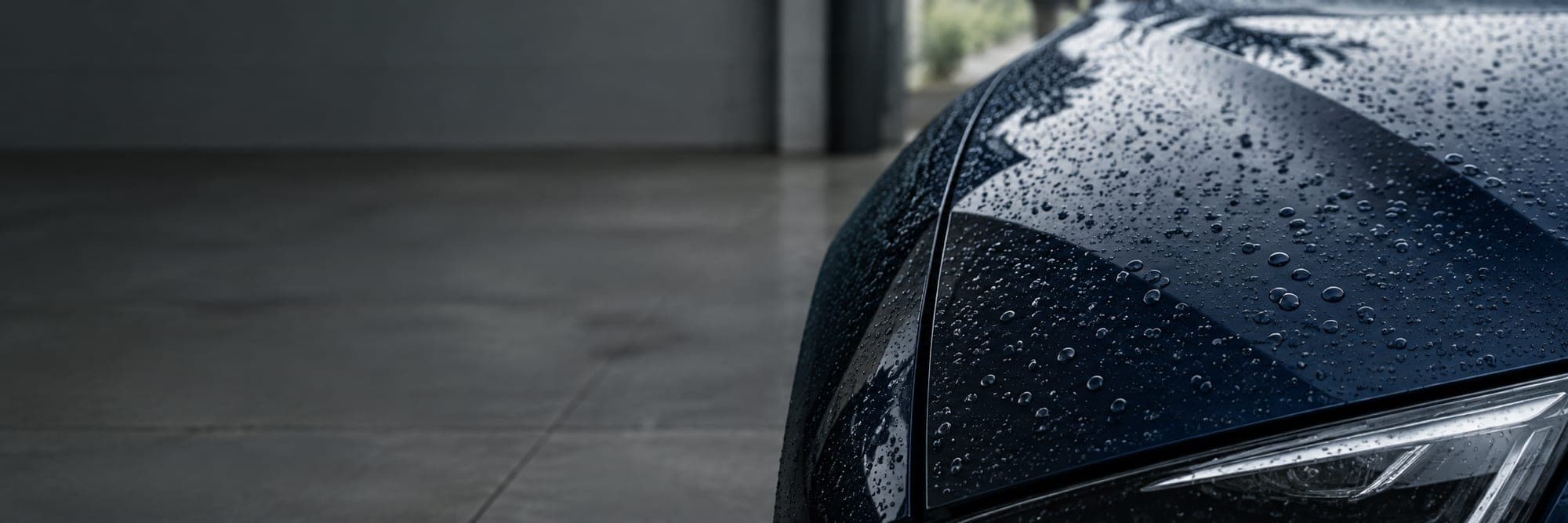
Pour a little water onto a clean, dry horizontal panel. Protection that is working pulls it into tight beads that run off when you tilt or drive. Protection that is failing lets it spread into flat sheets that sit there.
Wash the car and, once dry, run the back of your hand across the hood. Smooth means the surface is still shedding contamination. Gritty means things are bonding to the paint again, which is what a bare panel does.
Sheeting instead of beading on a coated car does not always mean the coating is gone — it is often a layer of road film sitting on top of a coating that is still there underneath, and a proper wash restores the behavior. If a decontaminating wash does not bring the beading back, the protection has genuinely worn through.
When to reapply
Before it fails, not after. A panel that has been bare for two months has been collecting bonded contamination and light etching that whole time, and the next detail has to remove that before it can protect anything — which is more work, and more clear coat.
That is the whole argument for seeing a vehicle on a rhythm rather than when it starts to look bad: every visit is a top-up rather than a recovery. Why recurring care is easier than undoing heavy buildup makes the same case for the interior.
Five habits that extend it
Use a pH-neutral car shampoo, never household detergent
Two buckets, and rinse the mitt between panels
Deal with bird droppings and sap the day you see them, with a damp towel and no pressure
Dry with a clean towel rather than letting the vehicle air-dry into water spots
Move the sprinkler that reaches the driveway — mineral spotting on a hot panel is one of the few things that etches quickly
Three products, three different jobs, and a lot of marketing in between. What each one actually is, what it protects against, and which is worth the money for the way you use your vehicle.
There is no single correct interval, and anyone who gives you one is guessing. What there is, is a short list of factors that decide it — and they are all things you already know about your own vehicle.
The argument for a schedule is not about discipline. It is that dirt changes state over time — and once it has, removing it stops being cleaning and starts being repair.
·4 min read
Book in two minutes
Ready to book it?
Enter your ZIP code, tell us what you drive, and we will show you the arrival windows we have open.