Auto detailing
How to choose a mobile detailer
Anyone can own a pressure washer and a van. These are the questions that separate a detailer from someone with equipment, and the answers you should expect to hear.

A detail is a defined list of work, not a vague promise to make a car nice.
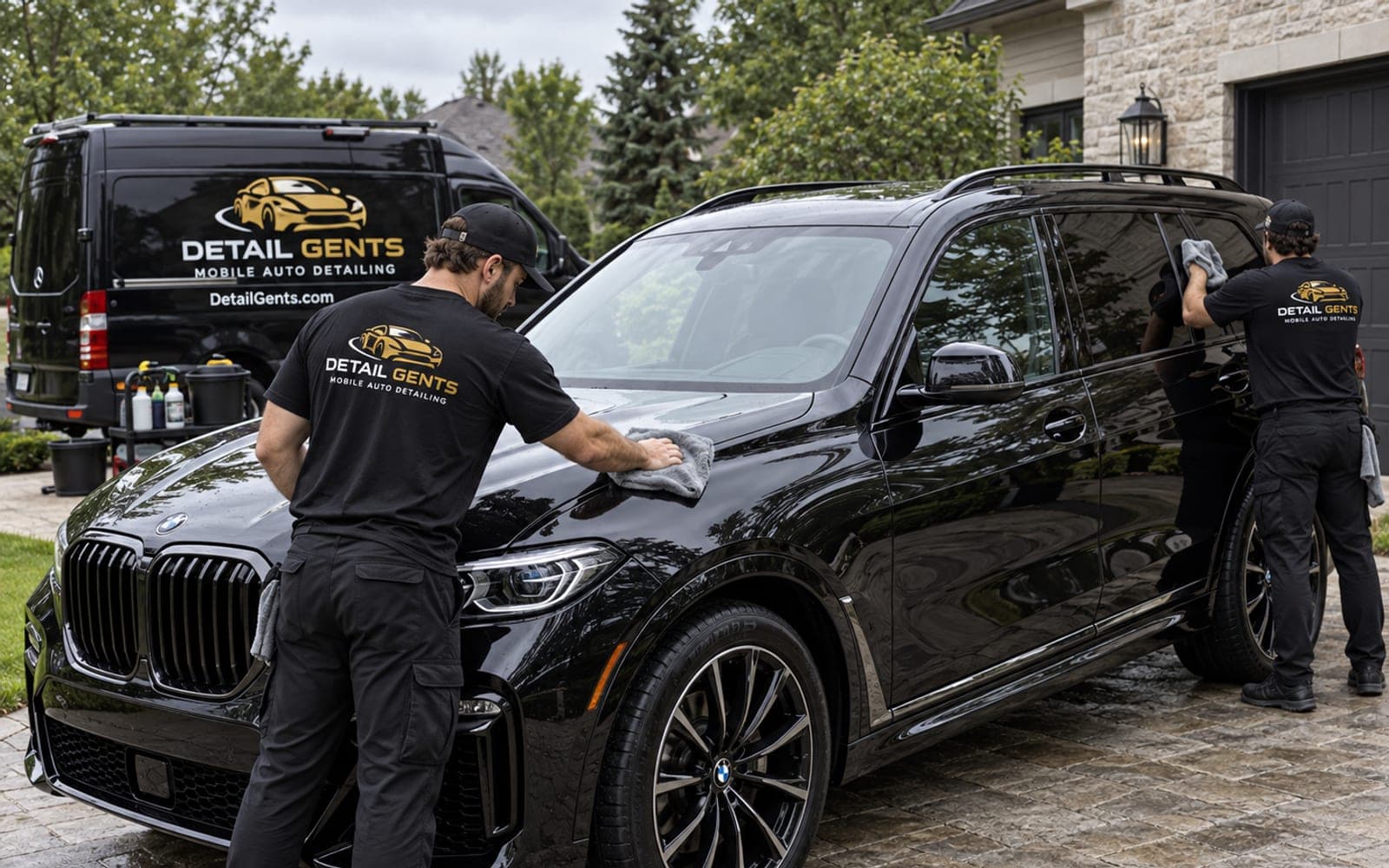
"Detailing" is one of those words that has been stretched until it means whatever the person saying it wants it to mean. A gas-station vacuum and an air freshener get called a detail. So does two days of machine polishing. Neither is useful if you are trying to work out what you would actually be buying.
What follows is the honest version: the work that a full mobile detail consists of, why each part of it is there, and the things it is routinely assumed to include that it does not.
A detail is a defined sequence of work carried out by hand, in a fixed order, to a checklist. A wash cleans the surface. A detail cleans what is under the surface and then puts something back — protection on the paint, conditioner on the leather, dressing on the trim — so the vehicle stays clean longer than it would otherwise.
Mobile detailing is the same work, done where the vehicle is already parked. The van carries its own water and its own power, so a driveway, an apartment lot or an office garage is the shop for the afternoon.
The order matters more than most people expect, because almost every avoidable scratch on a car was put there by cleaning it in the wrong sequence.
What is not automatically included outside: engine bay cleaning, machine polishing, and anything described as correction. Those are separate work with separate time attached to them. Paint enhancement and paint correction covers where that line sits.
An interior detail is mostly about removing what has worked its way into materials, rather than what is sitting on top of them.
Hot water extraction of the carpets and seats is a heavier process than a standard interior clean and is usually its own line. So is odor treatment, pet hair removal beyond a normal amount, and anything involving a spill that has soaked through to the foam. Interior detailing versus a deep interior clean explains what tips a job from one into the other.
This is the part most listings leave out, and it is the part worth reading twice.
Two things drive the time: how much vehicle there is, and what state it is in. A two-row crossover that is detailed every eight weeks is a fundamentally different job from a three-row SUV that has carried two children and a dog since last winter, even though the checklist is identical.
That is also why an honest price cannot be quoted from a body style alone. A vehicle in heavy condition needs more time on the same steps, and time is the cost. What actually changes the price of a detail goes through each factor.
Less than people expect, and the differences are practical rather than about quality.
If you want the short version of what to do before we arrive, it is on how to prepare for a mobile detailing appointment. It takes about five minutes and it buys you time on the vehicle instead of around it.
Keep reading
Chosen by what they have in common with this one, rather than by what was published most recently.
Anyone can own a pressure washer and a van. These are the questions that separate a detailer from someone with equipment, and the answers you should expect to hear.
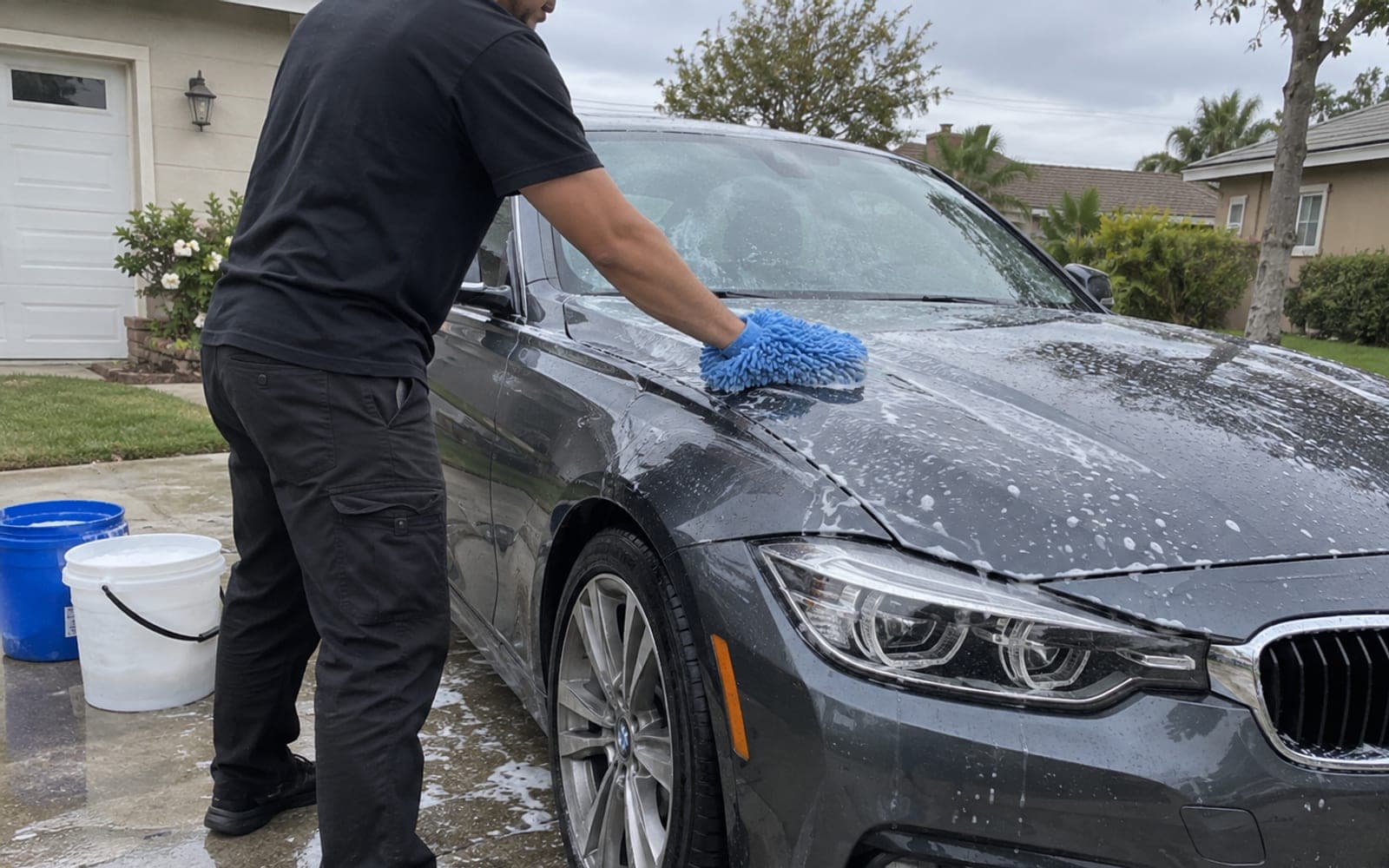
An automatic wash is fast and cheap and it is the right answer more often than detailers like to admit. Here is what it does well, what it costs your paint, and where the line actually falls.
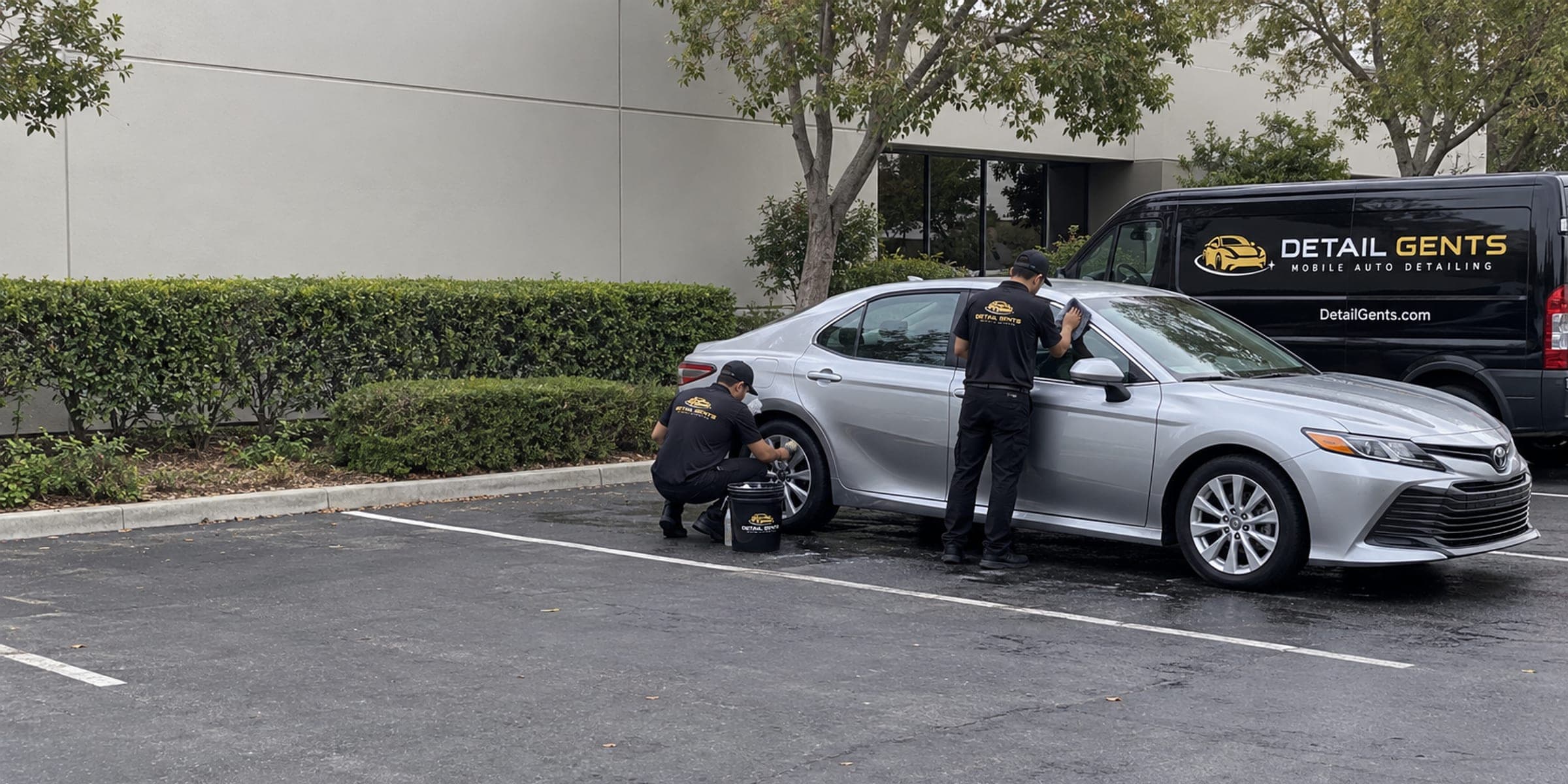
The honest answer is a range, and the range is not evasion — it is the vehicle, the condition and the service level doing the work. Here is what moves the clock, and how to plan around it.
Book in two minutes
Enter your ZIP code, tell us what you drive, and we will show you the arrival windows we have open.
No depositTwo-hour arrival windowsWe come to you