Interior care
Interior detailing vs. deep interior cleaning
Both clean the inside of a car. Only one of them gets into the foam. Here is how to tell which your vehicle needs before you book, and what each one can and cannot remove.

Three of the most common reasons people finally book a detail, and the three most misunderstood.
These three are what finally makes people book. They are also the three where the internet gives the worst advice, because most of it treats the symptom and makes the underlying problem harder to fix.
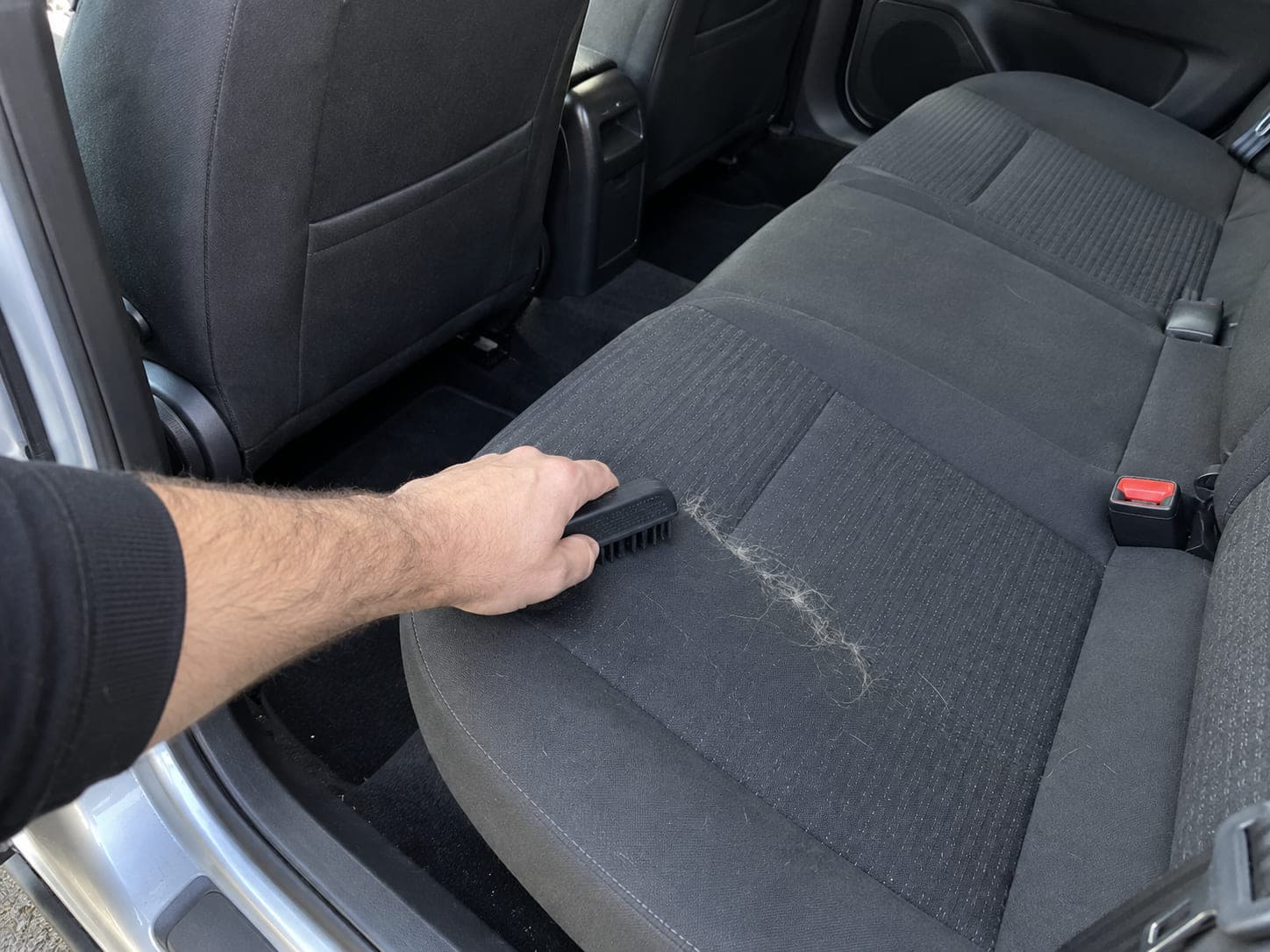
A vacuum does not remove pet hair because pet hair is not sitting on the fabric. Dog and cat hair has a scaled surface and, helped by static, it works down between the fibers and anchors there. Suction pulls at the end that is free and leaves the end that is hooked.
What works is mechanical: something with grip dragged across the weave in one direction to pull the hair back out, and only then suction to collect it.
What reduces it long term: a fitted cargo liner or a seat cover for the area the dog actually uses, and brushing the animal somewhere other than the car. Neither is exciting and both work better than anything applied afterward.
Almost everything about a stain is decided in the first ten minutes, by the person nearest to it, before any detailer sees it.
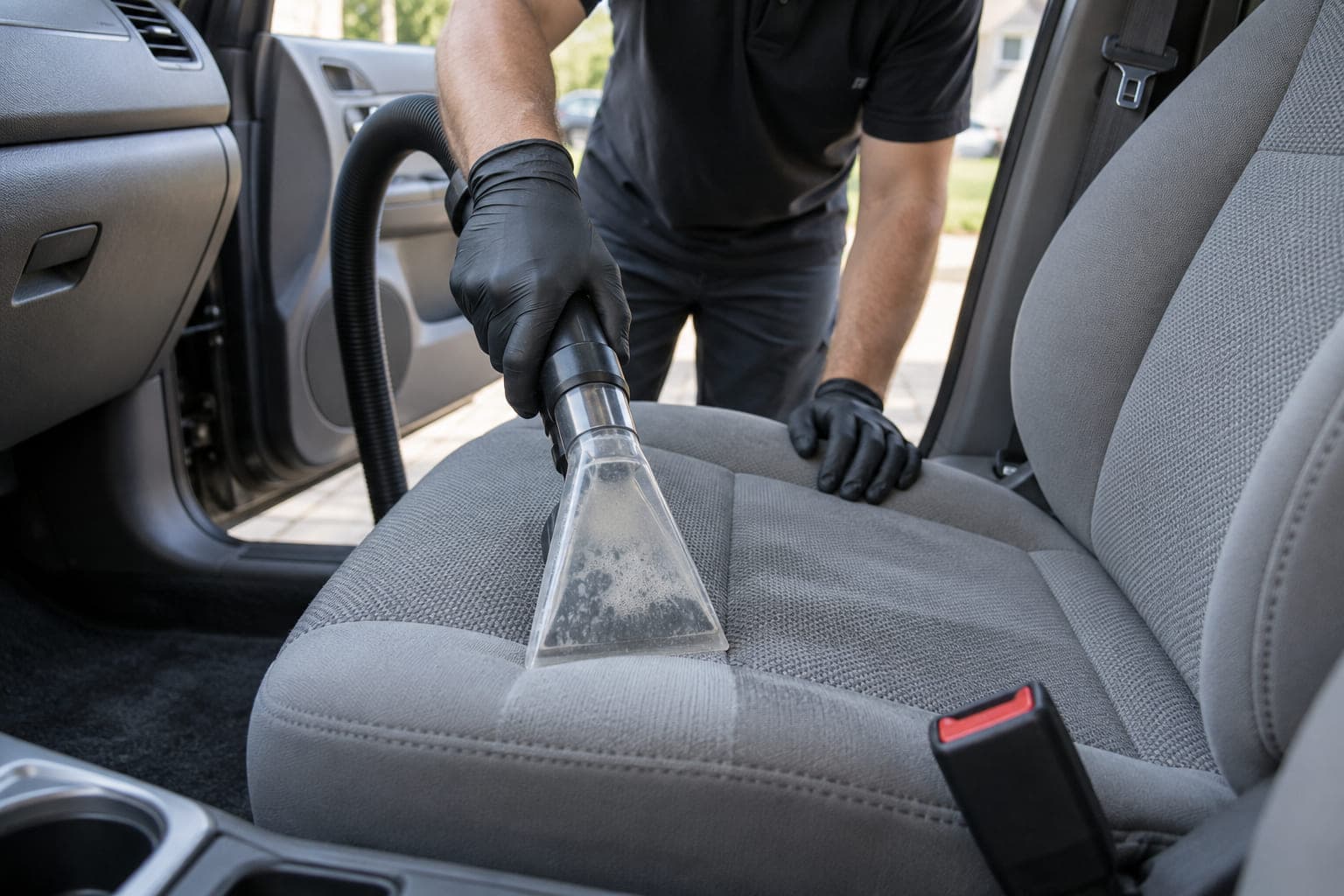
A stain that has been left, dried, and re-wetted a few times has usually migrated into the foam, and the only method that removes it is hot water extraction — inject, agitate, immediately pull back out. That is the difference between a standard interior clean and a deep interior clean.
What will not come out, however it is treated: dye transfer from denim into light leather or vinyl, a bleach mark, most ink, and anything where the material itself has lost color. Those are missing pigment rather than added soil, and no cleaner puts pigment back.
An odor is a source. It is not a smell hanging in the air, which is why the products sold to fix it — hanging trees, fogging sprays, scent bombs — reliably fail. They add a second smell on top of the first, and after a week you have the original back with a note of cherry.
Removing an odor means finding what is producing it and taking it out.
Keep reading
Chosen by what they have in common with this one, rather than by what was published most recently.
Both clean the inside of a car. Only one of them gets into the foam. Here is how to tell which your vehicle needs before you book, and what each one can and cannot remove.
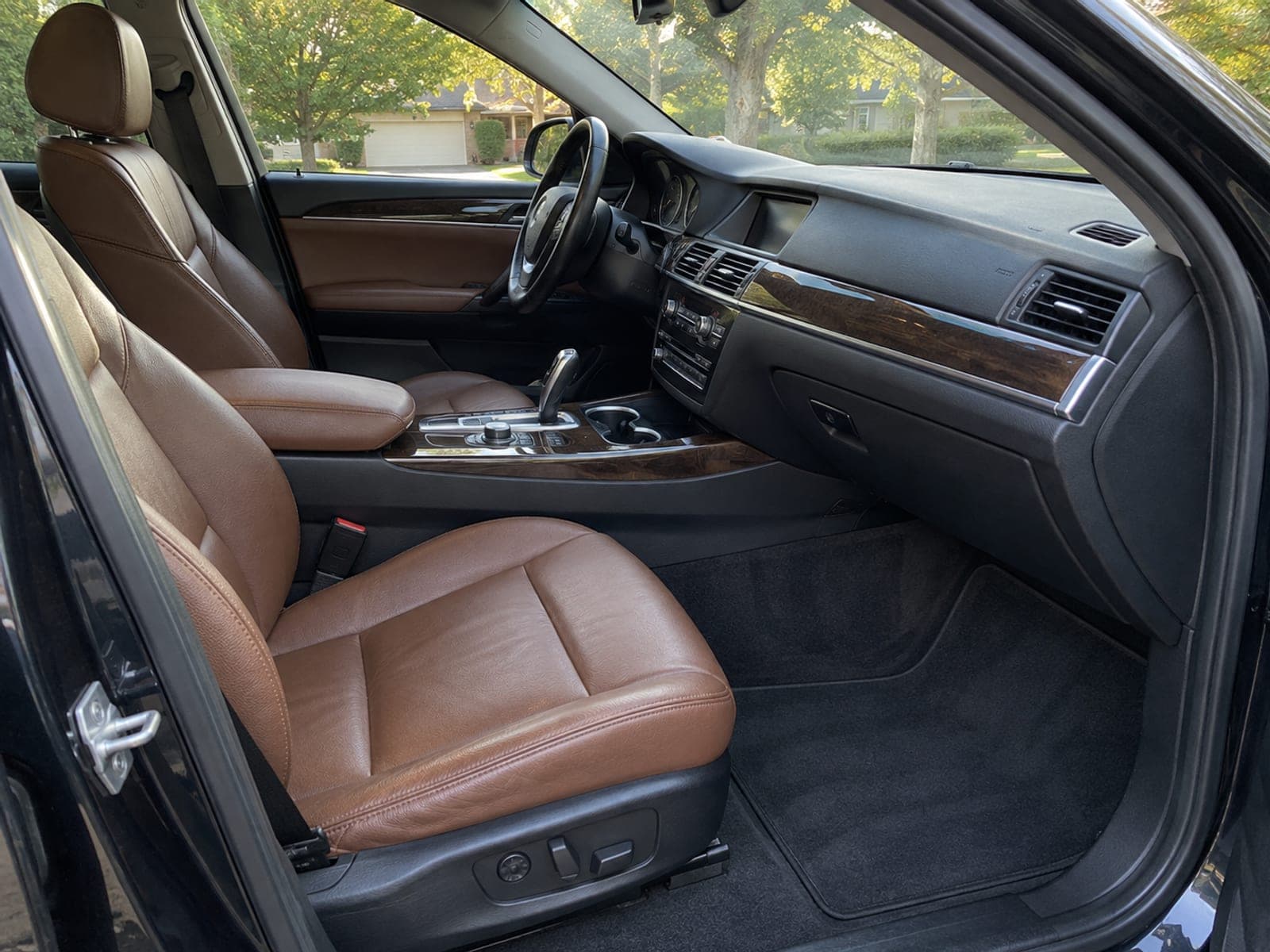
Almost every car seat sold as leather is a coated surface, and that single fact changes the entire method. Here is how to clean it without taking the finish with you.
Book in two minutes
Enter your ZIP code, tell us what you drive, and we will show you the arrival windows we have open.
No depositTwo-hour arrival windowsWe come to you